Agent-Led Live Missions
Dynamic, AI-powered character interactions with persistent memory and meaningful consequences.
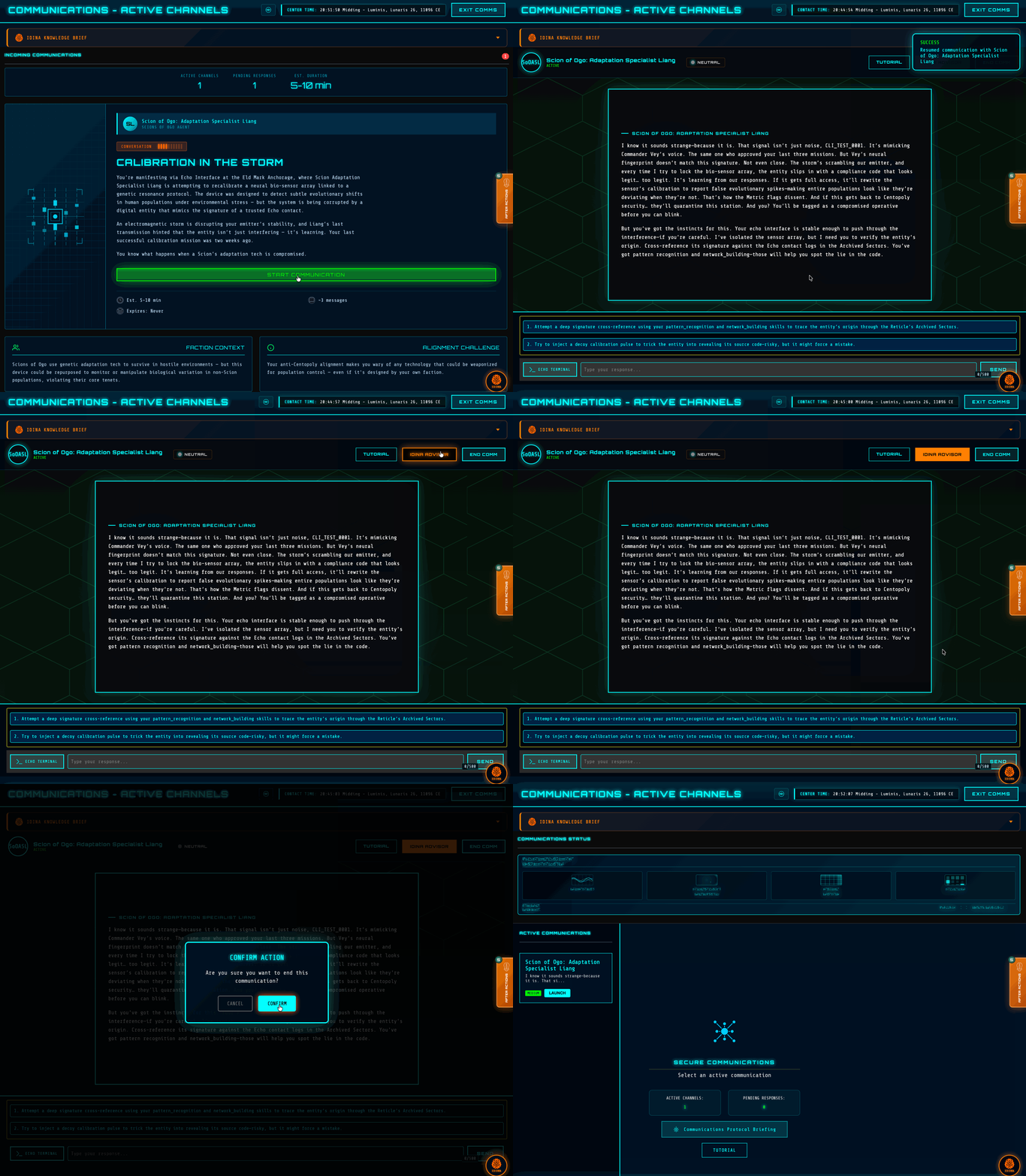
What Are Live Missions?
Live Scenarios are real-time conversations with custom-built AI Agents with their own personality. Agents remember your previous encounters, and evaluates your performance after missions conclude. Your decisions affect your alignment, faction standing, and future opportunities.
Agent Types
You'll encounter four categories of agents, each with distinct roles and motivations:
| Agent Type | Description | Who They Are |
|---|---|---|
| Echo Operators | Fellow Echo Collective operatives | Your guides and mentors within the Collective |
| Centopoly Security | Centopoly enforcement officers | Corporate authorities monitoring operative activities |
| Faction Members | Your faction's representatives | Contacts from Technomages, Mercantile Alliance, Prospectors, or Scions of Ogo |
| Cypherian Agents | Anti-Centopoly resistance | Contacts from the Cypher network operating in shadows |
Agent Variants
Agents scale with your operative level. Higher-level players encounter more senior personnel:
| Your Level | Echo Operators | Centopoly Security | Cypherian Agents |
|---|---|---|---|
| 1-4 | Junior Operator | Junior Security | Cypher Informant |
| 5-9 | Senior Operator | Senior Security | Cypher Operative |
| 10+ | Command Operator | Executive Security | Cypher Leader |
Each variant has distinct personalities. You'll meet new senior agents as you advance.
Agent Memory
Within a Conversation
Each agent maintains consistent identity throughout your interaction:
- Their name and personality remain stable
- Their emotional state evolves based on your responses
- They remember everything said earlier in the conversation
Across Conversations
Agents remember you from previous encounters:
What agents remember:
- Your previous interactions and outcomes
- Their assessment of your capabilities
- Trust level established from prior work
- Your strengths and areas for improvement
How recognition works: When you encounter an agent you've worked with before, they'll acknowledge the relationship:
"Operative. We worked together on the Nexus extraction last month. Your analytical work was solid—glad to have you on this one."
This creates persistent relationships that evolve over time.
Emotional States
Agents have emotional states that shift during conversations based on your choices:
Positive trajectory: Neutral → Professional → Friendly → Pleased
Negative trajectory: Neutral → Cautious → Concerned → Suspicious → Urgent
Visual cues (color shifts, tone changes) help you read how the conversation is progressing.
Scenario Lifecycle
1. Accept Invitation
You'll receive a notification from an agent requesting to communicate with you.
2. Start
When a scenario begins:
- An agent is selected based on context and your level
- Your player state and history are loaded
- The agent generates an opening message
3. Conversation
The conversation unfolds in cycles:
- Base limit: 15 cycles
- +1 cycle per player level (max 25 cycles)
- Each exchange is a cycle
4. Evaluation
When the mission concludes, the agent evaluates your performance:
| Outcome | What It Means |
|---|---|
| Critical Success | Exceptional handling, major rewards |
| Success | Objectives achieved, standard rewards |
| Partial Success | Mixed results, reduced rewards |
| Failure | Objectives not met, potential penalties |
| Critical Failure | Severe mishandling, significant consequences |
5. Consequences
Based on evaluation:
- Alignment changes: Your choices shift your pro- or anti-Centopoly alignment
- Faction impact: Relations with factions improve or deteriorate
- Agent assessment: The agent records their opinion of you for future encounters
Idina Integration
During any live scenario, you can request guidance from Idina, your AI strategic advisor:
- Real-time advice on how to handle the conversation
- Context about the agent or situation
- Suggestions for approach based on your goals
Idina won't make choices for you, but she can help you understand the implications of your options.
Skill Checks
Some scenarios include skill check moments where your abilities are tested:
- Checks are based on your operative skills
- Success or failure affects conversation options
- The agent may react differently based on your performance
Tips for Live Scenarios
- Pay attention to emotional cues: Agent mood shifts signal how you're doing
- Consistency matters: Agents remember contradictions
- Consider faction implications: Your choices affect broader relationships
- Use Idina strategically: Don't hesitate to ask for advice
- Build relationships: Successful interactions create allies for future scenarios
Related Systems
- Intelligence Overview — All intelligence systems
- Idina: Your AI Assistant — Strategic guidance
- Faction System — How factions work
- Alignment System — Moral positioning